Aviation History Timeline
A broad overview of the critical developments that transformed humanity's relationship with the sky.
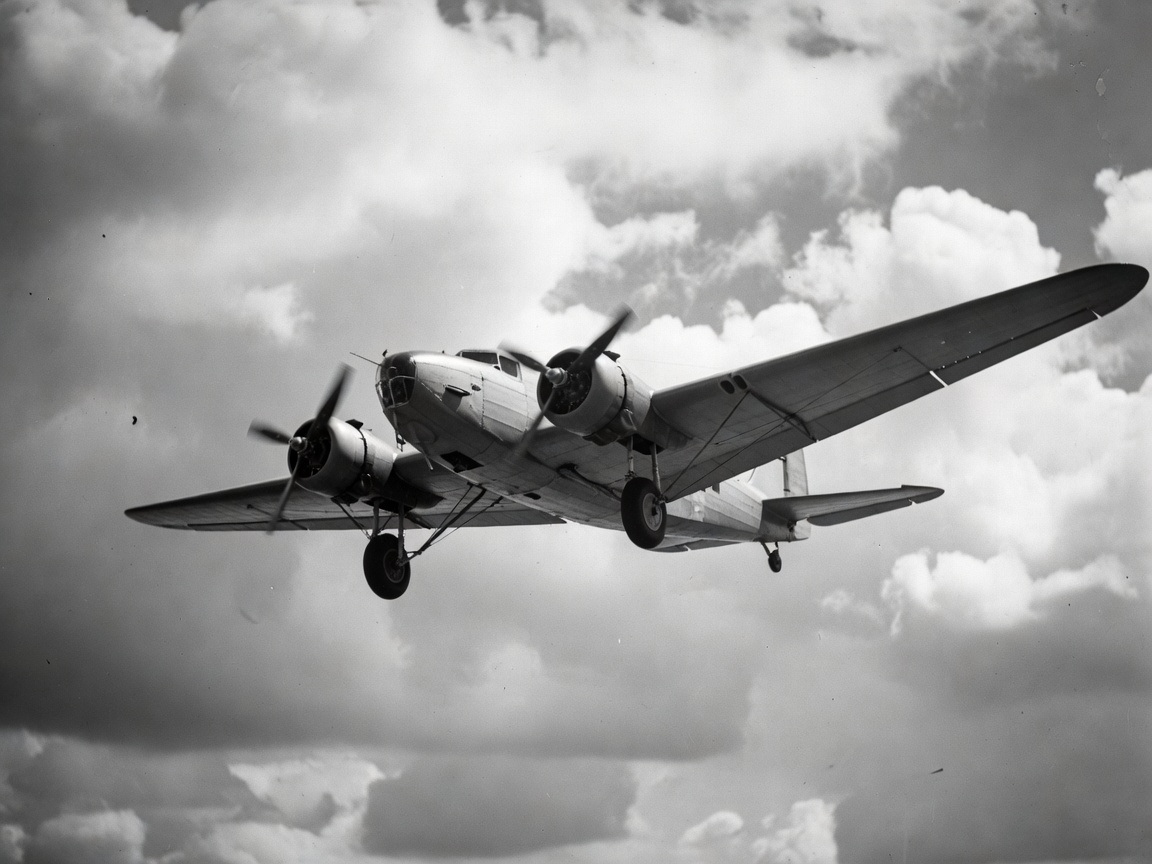
Early Powered Flight
The realization of sustained, controlled, heavier-than-air powered flight. These early experiments utilized wood, fabric, and wire structures, fundamentally proving that aerodynamic lift could overcome gravity when paired with an internal combustion engine.
Development of Commercial Aviation
Post-war technological transfers led to the creation of robust, pressurized prop-liners. This era established the foundational concepts of modern commercial air travel, including air traffic control routes and scheduled passenger services across continents.
The Introduction of Jet Aircraft
The transition from piston-driven propellers to turbojet engines revolutionized flight speed and altitude capability. Swept-wing designs became standard, allowing commercial aircraft to cruise smoothly above weather systems, drastically reducing travel times globally.
The Widebody Era
Driven by a need for massive passenger capacity on international routes, engineers developed widebody aircraft featuring twin aisles and high-bypass turbofan engines. This made long-haul air travel economically viable for the general public.
Digital Avionics & Fly-By-Wire
The mechanical linkages between pilot and aircraft were largely replaced by digital signals and computers. Glass cockpits reduced pilot workload, and computer-assisted flight envelopes drastically improved overall aviation safety statistics.
Fuel-Efficiency & Composite Materials
Recent developments focus heavily on economic and environmental efficiency. The integration of advanced carbon-composite materials creates lighter, stronger airframes, while next-generation engine architecture significantly reduces fuel consumption and noise footprints.