The Flight Deck Environment
An educational look at how pilots interface with complex aircraft systems through modern digital displays.
Hover over or tap the markers to understand the function of different cockpit areas.
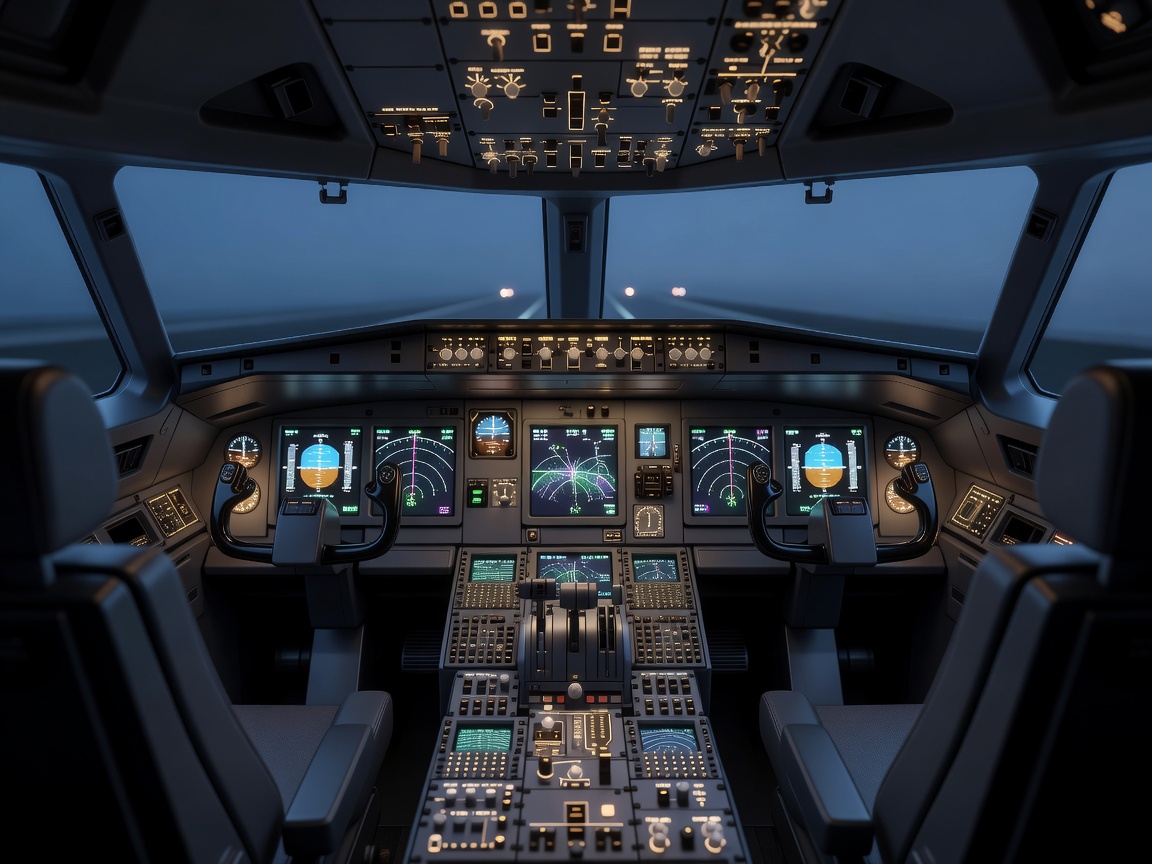
Combines critical flight data: attitude (pitch and roll), airspeed, altitude, and heading into one screen for rapid scanning.
Shows the aircraft's route, waypoints, weather radar overlays, and surrounding terrain or traffic data.
Central screen displaying engine parameters (thrust, temperature, fuel flow) and vital system warnings or caution messages.
Primary manual interface for pitch and roll control. Modern aircraft may use side-sticks instead of traditional center yokes.
The interface located under the windshield where pilots configure the autopilot system's speed, heading, and altitude targets.
The Evolution to the Glass Cockpit
Historically, aircraft cockpits were filled with hundreds of individual analog, mechanical gauges ("steam gauges"). This required high cognitive load from crews to monitor physical dials for engine performance, hydraulic pressure, and flight attitude.
The advent of the "glass cockpit" revolutionized aviation. Cathode Ray Tubes (CRTs), and later LCD displays, allowed engineers to consolidate vast amounts of data into flexible, digital formats. Flight Management Computers now process raw data and present only the most relevant information to the pilots, utilizing color-coding and digital alerts to enhance situational awareness and safety.